Corporate Governance and Environmental Sustainability: A Legal Study

Hello world
The Role of SEBI in Strengthening Corporate Governance

Facebook Instagram Linkedin Home About Us Our Services Articles Contact Us Blog The Role of SEBI in Strengthening Corporate Governance in India Introduction Corporate governance has emerged as a central pillar of India’s capital market integrity, especially as Indian companies attract global investors and list across jurisdictions. Sound governance practices enhance transparency, accountability, and long-term value creation, while weak governance erodes investor trust and market stability. In India’s promoter-driven corporate landscape, regulatory oversight plays a decisive role in balancing entrepreneurial control with minority shareholder protection. The Securities and Exchange Board of India (SEBI), established as the country’s securities market regulator, sits at the heart of this governance architecture. Beyond its traditional role of market supervision, SEBI has progressively shaped board practices, disclosure norms, and enforcement standards for listed entities. This article examines how SEBI has strengthened corporate governance through regulation, supervision, and enforcement. It analyses SEBI’s evolving mandate, core regulatory mechanisms, measurable impacts, persistent challenges, and the reforms required to sustain credible governance in a rapidly changing market environment. Background: SEBI’s mandate and evolution SEBI was established in 1988 and granted statutory status under the SEBI Act, 1992, following liberalisation of India’s economy and rapid expansion of capital markets. Its core mandate includes protecting investor interests, promoting orderly market development, and regulating securities markets and intermediaries. While early efforts focused on curbing market manipulation and improving disclosure, governance issues soon moved to the forefront. Major corporate failures exposed structural weaknesses in board oversight and financial reporting. The 2009 Satyam Computer Services scandal, involving large-scale accounting fraud, was a watershed moment. It highlighted the inadequacy of formal compliance without effective board independence, audit oversight, and enforcement. In response, SEBI intensified its governance focus, aligning Indian norms with global best practices while tailoring them to domestic realities. Over time, SEBI’s role expanded from a disclosure-based regulator to an active governance enforcer. Through listing conditions, continuous disclosure norms, and stringent penalties, SEBI positioned itself as a quasi-gatekeeper of board conduct and managerial accountability for listed companies. This evolution reflects a broader policy shift: corporate governance is no longer voluntary or reputational, but a regulatory expectation with legal consequences. Core mechanisms SEBI uses to strengthen corporate governance Regulatory framework and key instruments SEBI relies primarily on listing regulations and market conduct rules to influence corporate governance. The most significant instrument is the SEBI (Listing Obligations and Disclosure Requirements) Regulations, 2015 (LODR), which consolidated earlier clauses and created a comprehensive governance code for listed entities. Alongside LODR, SEBI uses insider trading regulations, takeover rules, and periodic amendments to address emerging risks. Table: Major SEBI regulations influencing corporate governance Regulation Year Core purpose Governance impact SEBI Act 1992 Statutory powers and enforcement Legal authority over markets LODR Regulations 2015 Disclosure and board norms Standardised governance code Insider Trading Regulations 2015 Prevent misuse of UPSI Market integrity and fairness RPT amendments (LODR) 2021 Tighten related-party oversight Minority shareholder protection Takeover Regulations 2011 Fair acquisition process Transparency in control changes Together, these instruments give SEBI significant leverage over listed companies by linking governance compliance to market access. Disclosure and transparency requirements Continuous disclosure is the cornerstone of SEBI’s governance philosophy. LODR mandates timely disclosure of financial results, material events, related-party transactions, and shareholding patterns. Boards are required to certify internal controls and risk management systems, reducing information asymmetry between management and investors. Enhanced disclosure has shifted governance from episodic reporting to ongoing accountability. Board composition and independence SEBI has reshaped Indian boardrooms by mandating independent directors, minimum board diversity, and specialised committees. Listed companies must appoint at least one woman director and ensure that independent directors constitute a significant proportion of the board. Nomination and remuneration committees, with a majority of independent directors, oversee appointments and executive pay. These measures aim to dilute promoter dominance and introduce professional oversight. Audit committees and internal controls Audit committees occupy a central role under SEBI regulations. They are responsible for financial reporting oversight, appointment of auditors, and review of internal controls. Post-Satyam reforms strengthened audit committee powers and required direct interaction with statutory and internal auditors. SEBI’s emphasis on auditor independence and rotation complements governance oversight by reducing conflicts of interest. Related-party transactions and accountability Related-party transactions (RPTs) pose acute risks in promoter-led companies. SEBI’s 2021 amendments tightened approval thresholds, expanded the definition of related parties, and required minority shareholder approval for material RPTs. These changes directly address tunnelling risks and improve transparency in intra-group dealings Insider trading prevention and market surveillance SEBI’s Insider Trading Regulations impose strict controls on unpublished price sensitive information (UPSI). Companies must maintain structured digital databases, trading window closures, and codes of conduct for insiders. Advanced market surveillance systems enable SEBI to detect suspicious trading patterns, reinforcing a culture of compliance and deterrence. Shareholder rights and minority protection SEBI has enhanced shareholder participation through e-voting, postal ballots, and disclosure of voting outcomes. Class-action mechanisms under company law, supported by SEBI’s disclosure norms, empower minority shareholders. Takeover regulations ensure equitable treatment during changes in control, reinforcing investor confidence. Enforcement and deterrence Regulation without enforcement lacks credibility. SEBI deploys inspections, show-cause notices, monetary penalties, and market bans to deter non-compliance. It also regulates intermediaries, recognising their gatekeeping role in governance. High-profile enforcement actions signal regulatory resolve and shape market behaviour. Impact assessment with evidence SEBI’s governance interventions have produced measurable outcomes. According to SEBI annual reports, compliance with LODR disclosure requirements has improved steadily since 2015, with significantly fewer qualified audit reports among large listed companies (SEBI, 2022). Board diversity indicators also show progress: the proportion of listed companies with at least one woman director rose sharply after mandatory requirements were enforced. Enforcement actions provide further evidence. SEBI has imposed substantial penalties for disclosure failures, insider trading violations, and RPT breaches, reinforcing deterrence. High-visibility cases involving listed conglomerates have underscored that scale does not confer immunity. Market surveys and foreign portfolio investment trends suggest that stronger governance norms have supported investor confidence, even during periods of market volatility. Importantly, governance reforms have aligned India more closely with
Evolution of Corporate Governance in India: A Post‑Satyam Scam Perspective
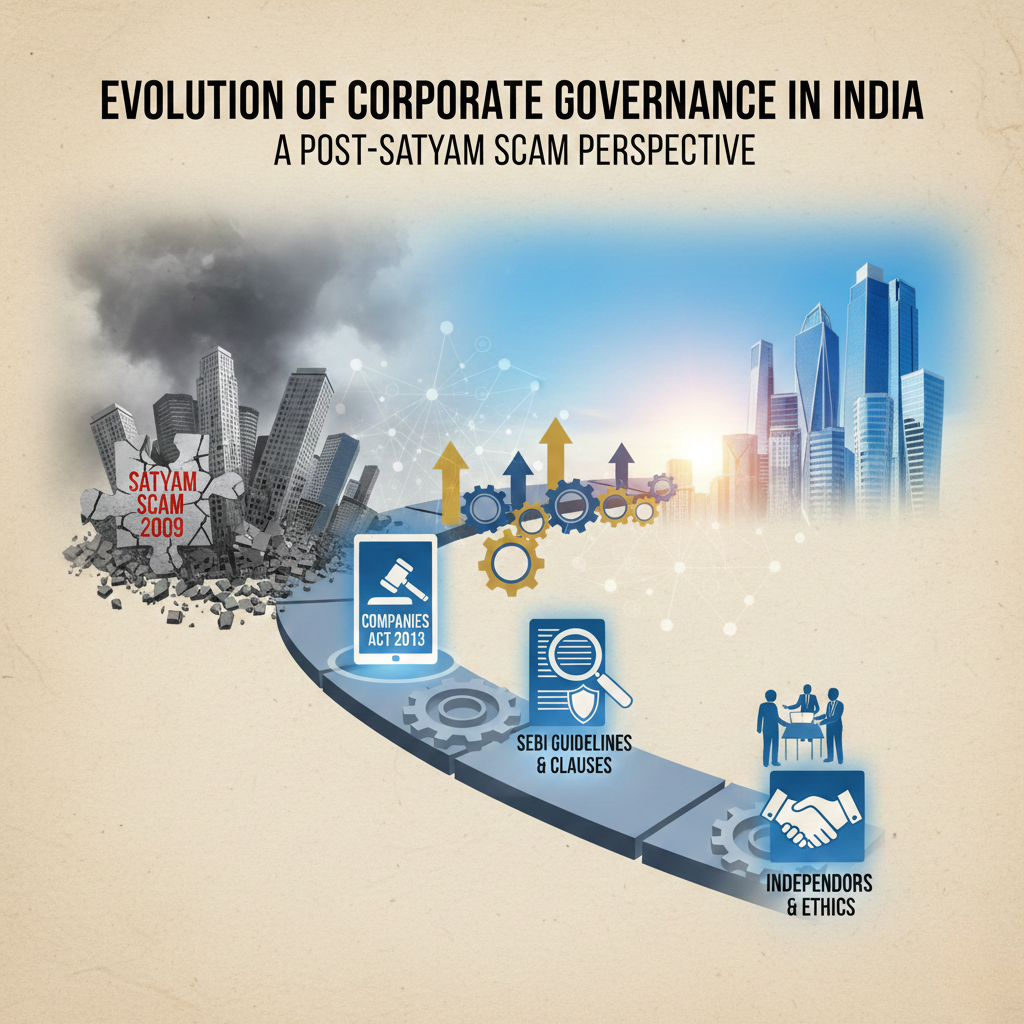
Facebook Instagram Linkedin Home About Us Our Services Articles Contact Us Blog Evolution of Corporate Governance in India: A Post-Satyam Scam Perspective Introduction Corporate governance in India is often described in two phases: before and after the Satyam Computer Services scandal of 2009. While governance frameworks existed earlier, Satyam exposed how formal compliance could coexist with deep-seated failures in oversight, ethics, and accountability. The episode shook investor confidence, embarrassed regulators, and forced a national reckoning on how Indian corporations were governed. Satyam mattered not merely because of the scale of fraud, but because it involved a widely admired, globally listed firm that was considered a symbol of India’s IT success. Its collapse challenged assumptions that market reputation, reputed auditors, and independent directors were sufficient safeguards. The scandal also arrived at a time when India was seeking greater integration with global capital markets, making governance credibility economically critical. This article analyses the evolution of corporate governance in India from a post-Satyam perspective. It reviews the weaknesses the scandal exposed, examines the regulatory and institutional reforms that followed, evaluates market responses, and assesses ongoing challenges. The central argument is that while India’s governance framework has strengthened significantly since 2009, effectiveness now depends less on rule-making and more on enforcement quality, board capability, and ethical leadership. The Satyam scandal: brief recap In January 2009, Satyam Computer Services’ founder-chairman Ramalinga Raju confessed to having falsified the company’s accounts for several years. He admitted to overstating cash balances by over ₹5,000 crore, manipulating revenues, and understating liabilities (Raju, 2009). The fraud represented nearly one-third of the company’s balance sheet and had gone undetected by auditors, analysts, and the board. The revelation triggered an immediate collapse in Satyam’s share price, wiped out billions in market value, and raised fears about the reliability of Indian corporate disclosures. International investors questioned whether Satyam was an aberration or a symptom of systemic governance weaknesses. The scandal also highlighted the dangers of promoter dominance in Indian companies, where founders often wield significant control despite dispersed shareholding. The government intervened swiftly, dissolving Satyam’s board and facilitating its sale to Tech Mahindra to preserve jobs and client contracts. While this limited systemic damage, the reputational shock endured. For regulators and policy makers, Satyam became a watershed moment that demanded structural reform rather than incremental adjustments. State of corporate governance pre-Satyam Before Satyam, India’s corporate governance framework was shaped largely by Clause 49 of the Listing Agreement, introduced by SEBI in the early 2000s. Clause 49 mandated independent directors, audit committees, and enhanced disclosures. On paper, these norms aligned broadly with global standards (SEBI, 2004). In practice, compliance was often procedural rather than substantive. Boards were frequently dominated by promoters, with independent directors lacking information, time, or incentives to challenge management. Auditor independence was compromised by long tenures and the provision of lucrative non-audit services. Related-party transactions, especially within business groups, were inadequately scrutinised and poorly disclosed. Internal controls and risk management systems were underdeveloped, particularly in fast-growing companies. Enforcement was fragmented, with limited coordination between SEBI, the Ministry of Corporate Affairs (MCA), and investigative agencies. Penalties for governance failures were modest, reducing deterrence. Satyam exposed how these weaknesses could coexist within a seemingly compliant governance structure, revealing a gap between form and substance. Regulatory and institutional reforms after Satyam The post-Satyam period witnessed the most comprehensive overhaul of India’s corporate governance regime since liberalisation. Reforms were both legislative and regulatory, aimed at strengthening boards, audits, disclosures, and enforcement. SEBI played a central role by tightening listing requirements and disclosure standards. Clause 49 was progressively strengthened, culminating in the SEBI (Listing Obligations and Disclosure Requirements) Regulations, 2015. The LODR regulations consolidated and modernised governance norms, imposing stricter requirements on board composition, audit committees, related-party transactions, and continuous disclosures (SEBI, 2015). Listed companies were required to have at least one woman director, enhancing board diversity. A landmark reform was the enactment of the Companies Act, 2013, which replaced the 1956 legislation. The Act significantly expanded directors’ duties under Section 166, explicitly requiring directors to act in good faith, exercise due care, and protect stakeholder interests (MCA, 2013). It mandated independent directors for certain classes of companies, prescribed their roles through Schedule IV, and introduced mandatory board evaluation. The Act also strengthened audit quality. Provisions on auditor rotation under Section 139 limited long auditor tenures, while restrictions on non-audit services aimed to protect independence. Enhanced internal financial controls and mandatory internal audits for specified companies improved risk oversight. The introduction of corporate social responsibility obligations under Section 135 reflected a broader conception of corporate accountability. Institutionally, enforcement capacity was bolstered. The Serious Fraud Investigation Office (SFIO) was given statutory backing and greater investigative powers. Penalties for fraud, including imprisonment under Section 447, increased the personal risk for promoters and executives. SEBI also enhanced its surveillance and enforcement mechanisms, using data analytics to detect market abuse. The role of audit committees and independent directors evolved in parallel. Audit committees were given expanded powers over auditor appointments, related-party approvals, and financial reporting. Independent directors, while facing higher liability, gained clearer authority and protection mechanisms, including directors’ and officers’ insurance. Collectively, these reforms represented a shift from disclosure-centric governance to accountability-oriented governance. However, their effectiveness depended on consistent enforcement and cultural change within boards and management. Market and corporate responses Indian corporates responded to post-Satyam reforms by professionalising board processes and strengthening compliance infrastructure. Many large companies expanded board agendas to include risk management, cybersecurity, and succession planning. Internal audit functions were upgraded, often reporting directly to audit committees rather than management. Institutional investors became more active stewards. Domestic mutual funds and insurance companies, encouraged by stewardship codes, began scrutinising governance practices and voting against management when concerns arose (SEBI, 2020). Proxy advisory firms gained influence, shaping shareholder voting outcomes on executive pay, board appointments, and related-party transactions. Audit firms invested in forensic capabilities and tightened engagement acceptance standards. High-profile enforcement actions against auditors reinforced expectations of professional scepticism. Cross-border investors increasingly compared Indian governance practices with
Gender Diversity on Corporate Boards: Impact on Governance and Performance

Facebook Instagram Linkedin Home About Us Our Services Articles Contact Us Blog Gender Diversity on Corporate Boards: Impact on Governance and Performance Introduction Gender diversity on corporate boards has become one of the most visible indicators of modern governance quality. Once framed primarily as an equity or social responsibility issue, it is now increasingly evaluated through the lens of risk oversight, strategic decision-making, and long-term value creation. Boards are expected to reflect the complexity of their stakeholder environments, and gender balance is often viewed as a proxy for broader diversity of skills, perspectives, and experiences. This article explores the impact of gender diversity on corporate boards across three dimensions: governance effectiveness, firm performance, and policy design. It synthesizes academic research, practitioner studies, and cross-country experience to provide a balanced, evidence-based assessment. The discussion covers global trends, empirical findings—both positive and inconclusive—the mechanisms through which diversity may operate, and real-world examples from quota-based and voluntary regimes. The main conclusion is nuanced. Gender diversity on boards is not a guaranteed path to superior financial performance, nor is it merely symbolic. When integrated thoughtfully into board processes, supported by a strong talent pipeline, and aligned with broader governance reforms, gender diversity can enhance oversight, reduce certain risks, and improve decision quality. However, poorly designed mandates or tokenistic approaches may limit these benefits. Background & Context In the boardroom context, gender diversity typically refers to the representation of women among non-executive and executive directors, often measured as the percentage of female board members. More advanced discussions consider gender balance (rather than minimum representation) and acknowledge intersectionality, recognizing that gender interacts with factors such as professional background, nationality, and age. Over the past two decades, global approaches to board gender diversity have diverged. Several European countries—including Norway, France, Germany, and Italy—have adopted mandatory quotas or binding targets, often requiring 30–40 percent female representation on boards of listed companies. Elsewhere, such as the United Kingdom, Australia, and the United States, policymakers have favored voluntary targets, disclosure requirements, and investor-led pressure rather than strict quotas. Investor stewardship has become a powerful driver. Large institutional investors and proxy advisory firms increasingly expect companies to demonstrate progress on board diversity, and in some cases vote against nominating committee chairs where boards lack female representation (BlackRock, 2021). Common metrics used to assess progress include the proportion of women on boards, representation on key committees (audit, nomination, remuneration), female board chairs, and the strength of the executive pipeline feeding future director appointments. Empirical Evidence & Literature Overview The empirical literature on gender diversity and firm performance is extensive and mixed. Many studies report positive associations between female board representation and financial or governance outcomes, while others find neutral or context-dependent effects. A smaller number highlight potential short-term disruptions following rapid, mandated changes. Consulting and industry reports have been influential in shaping boardroom perceptions. McKinsey & Company’s analyses of large global firms have consistently found correlations between gender-diverse leadership teams and higher profitability and value creation (McKinsey, 2015; McKinsey, 2020). Credit Suisse Research Institute reported that companies with at least one female director tended to exhibit higher returns on equity and lower leverage over long periods, suggesting more prudent capital management (Credit Suisse, 2016). Catalyst and MSCI have similarly linked female board representation to stronger ESG scores and fewer governance controversies (Catalyst, 2014; MSCI, 2020). Academic research paints a more cautious picture. Meta-analyses indicate that while there is often a small positive relationship between board gender diversity and firm performance, the effect size is modest and sensitive to methodology (Post & Byron, 2015). Some studies find improvements in governance-related outcomes—such as board attendance, monitoring intensity, and audit quality—without a clear impact on short-term financial performance. Others identify no statistically significant relationship once firm size, industry, and country effects are controlled. Research on risk and stability has produced more consistent findings. Several studies suggest that gender-diverse boards are associated with lower earnings volatility, more conservative financial policies, and better risk oversight, particularly in financial institutions (Adams & Ferreira, 2009). However, critics argue that causality remains difficult to establish: better-governed firms may be more likely to appoint women directors in the first place. Table 1: Selected Empirical Studies on Board Gender Diversity Study Sample / Period Main Finding Adams & Ferreira (2009) US listed firms, 1996–2003 Improved monitoring; mixed performance effects McKinsey (2015/2020) Global firms Positive correlation with profitability Credit Suisse (2016) Global large-cap firms Higher ROE, lower leverage Post & Byron (2015) Meta-analysis Small positive governance effects MSCI (2020) Global ESG data Better ESG and fewer controversies Overall, the evidence supports the view that gender diversity is more strongly linked to governance quality and risk management than to immediate financial outperformance. Mechanisms: How Gender Diversity Affects Governance and Performance Several plausible mechanisms explain how gender diversity may influence board effectiveness. First, monitoring and oversight tend to improve with more diverse boards. Empirical studies suggest that female directors, on average, have higher attendance rates and are more likely to sit on monitoring-intensive committees such as audit and risk, strengthening internal controls (Adams & Ferreira, 2009). Second, diversity of perspectives can enhance decision-making. Boards composed of directors with varied professional and life experiences are less prone to groupthink, a well-documented risk in homogenous groups. Gender diversity may broaden the range of questions asked, challenge implicit assumptions, and improve the quality of strategic debate—particularly in areas such as human capital management, consumer behavior, and reputational risk. Third, gender-diverse boards can positively influence stakeholder relations. Companies with visible female leadership may be better positioned to attract and retain talent, especially in competitive labor markets, and may enjoy reputational benefits with customers, regulators, and investors who prioritize inclusive governance. However, there are also limits and potential downsides. Tokenism—appointing one woman to an otherwise homogenous board—may generate symbolic compliance without substantive influence. Cultural resistance or poorly managed board dynamics can marginalize minority voices, reducing the expected benefits. In quota-driven transitions, some firms initially face a constrained talent pool, particularly where executive pipelines have historically been male-dominated. Finally, concerns
Comparative Analysis of Corporate Governance Codes in India and the UK

Facebook Instagram Linkedin Home About Us Our Services Articles Contact Us Blog Comparative Analysis of Corporate Governance Codes in India and the UK Introduction Corporate governance codes play a critical role in shaping how companies are directed, controlled, and held accountable. For investors, regulators, and boards alike, these frameworks provide the rules and expectations that underpin trust in capital markets. India and the United Kingdom offer two influential yet distinct approaches to corporate governance, reflecting differences in legal traditions, market maturity, ownership patterns, and regulatory philosophy. The UK is widely regarded as a pioneer of modern, principles-based corporate governance, with its “comply or explain” model embedded in the UK Corporate Governance Code and overseen by the Financial Reporting Council (FRC). India, by contrast, operates a more prescriptive, statute-driven framework combining the Companies Act, 2013 with detailed listing obligations issued by the Securities and Exchange Board of India (SEBI) under the SEBI (Listing Obligations and Disclosure Requirements) Regulations, 2015 (SEBI LODR). This blog offers a structured comparative analysis of the two regimes. It examines their historical development, core governance requirements, enforcement mechanisms, and practical outcomes. Key areas such as board composition, disclosure, shareholder engagement, executive remuneration, and stakeholder considerations are assessed side by side. The discussion is intended to inform corporate readers, law and finance students, policymakers, and practitioners seeking a clear, balanced overview rather than jurisdiction-specific legal advice. Historical and Regulatory Context United Kingdom Corporate governance reform in the UK has evolved incrementally through market-led initiatives responding to corporate failures. Starting with the Cadbury Report (1992), followed by the Greenbury, Hampel, and Higgs reviews, the UK gradually consolidated best practices into a single code. The current UK Corporate Governance Code, most recently revised in 2018, applies to companies with a premium listing on the London Stock Exchange. A defining feature of the UK approach is its principles-based nature. Companies are expected to comply with the Code’s provisions or explain deviations in their annual reports. Oversight rests primarily with the Financial Reporting Council, which sets the Code and monitors reporting quality, while enforcement of listing rules is undertaken by the Financial Conduct Authority (FCA). This architecture reflects confidence in market discipline and informed shareholder engagement. India India’s corporate governance framework is rooted more firmly in legislation and regulatory mandates. The Companies Act, 2013 marked a watershed moment, introducing statutory duties for directors, mandatory independent directors, board committees, and enhanced disclosure obligations (for example, Sections 149, 177, and 178). These reforms were strongly influenced by high-profile governance failures, most notably the Satyam scandal in 2009. For listed entities, SEBI LODR Regulations, particularly Regulations 17 to 27, provide granular governance requirements covering board composition, audit committees, related-party transactions, and reporting. SEBI acts as both rule-maker and enforcement authority, with powers to impose monetary penalties, suspend trading, and initiate quasi-criminal proceedings. Core Comparative Areas Board Composition and Independence In the UK, the Code emphasizes board balance, independence, and effectiveness. At least half the board, excluding the chair, should comprise independent non-executive directors for larger companies. Independence is assessed through qualitative criteria, including tenure, prior relationships, and shareholding links. Separation of the chair and chief executive roles is a core principle, aimed at preventing concentration of power. India mandates a minimum number of independent directors by statute. Listed public companies must ensure that at least one-third of the board comprises independent directors (Companies Act, 2013, Section 149; SEBI LODR Regulation 17). Where the chair is an executive or related to promoters, SEBI requires at least half the board to be independent. While these rules enhance formal independence, critics note that promoter influence in concentrated ownership structures can dilute practical autonomy. Board Committees and Functions Both jurisdictions rely heavily on specialized board committees. In the UK, audit, nomination, and remuneration committees are mandatory for premium-listed companies, with a majority of independent non-executive directors. Their roles are guided by detailed principles rather than rigid procedures, allowing flexibility in implementation. India prescribes committees through both statute and regulation. Audit committees are compulsory for listed companies and certain large unlisted entities (Companies Act, 2013, Section 177). Nomination and remuneration committees are also mandatory (Section 178). SEBI LODR supplements these requirements with procedural detail, such as quorum rules and reporting formats. The Indian approach prioritizes uniformity and minimum standards, sometimes at the cost of board discretion. Disclosure, Transparency, and Reporting Transparency is central to both governance systems, but the mechanisms differ. UK companies publish an annual corporate governance statement explaining how they have applied the Code’s principles and, where relevant, justifying deviations. This narrative approach encourages meaningful disclosure rather than box-ticking. India requires extensive, standardized disclosures. SEBI LODR mandates quarterly compliance reports, detailed corporate governance sections in annual reports, and immediate disclosure of material events (Regulation 30). Non-financial disclosures, such as related-party transactions and risk management practices, are tightly regulated. While this enhances comparability, it can also lead to voluminous disclosures with limited analytical value for investors. Shareholder Rights and Engagement The UK governance model assumes active, informed shareholders. Institutional investors are encouraged to engage with boards and exercise stewardship responsibilities under the UK Stewardship Code, also overseen by the FRC. Annual general meetings, proxy voting, and “say on pay” votes are key engagement tools. India has strengthened shareholder rights significantly over the past decade. Electronic voting, mandatory postal ballots for key resolutions, and enhanced minority protection mechanisms are now standard. However, dispersed retail shareholding and promoter dominance can limit the practical impact of shareholder activism. India has also introduced its own Stewardship Code for institutional investors through SEBI, though its influence is still evolving. Enforcement, Monitoring, and Sanctions A major point of divergence lies in enforcement philosophy. In the UK, non-compliance with the Code does not automatically attract sanctions. Market discipline, investor scrutiny, and reputational consequences are expected to drive compliance. The FCA may intervene where disclosure obligations are breached, but criminal liability is relatively rare. India adopts a more enforcement-oriented stance. SEBI possesses wide investigative and punitive powers, including monetary penalties, disgorgement, and director debarment. Serious violations
The Effectiveness of Whistleblower Policies in Corporate Governance

Facebook Instagram Linkedin Home About Us Our Services Articles Contact Us Blog The Effectiveness of Whistleblower Policies in Corporate Governance Introduction Whistleblower policies have moved from the margins of corporate governance to its center, driven by high-profile scandals, regulatory reform, and rising expectations of corporate accountability. Boards and senior executives increasingly view internal reporting mechanisms as an early warning system for fraud, corruption, and ethical failures that might otherwise remain hidden until they trigger regulatory enforcement or public outrage. At the same time, employees, investors, and regulators scrutinize whether these policies genuinely protect those who speak up or merely exist on paper. This article examines the effectiveness of whistleblower policies as a governance tool rather than as a symbolic compliance requirement. Effectiveness is assessed by asking whether such policies meaningfully encourage reporting, protect reporters from retaliation, and enable organizations to detect and address misconduct before it escalates. The analysis integrates governance theory, regulatory expectations, empirical research, and real-world corporate cases to present a balanced view. The central thesis is that whistleblower policies can be highly effective in strengthening corporate governance, but only when they are credibly designed, actively supported by leadership, and embedded in organizational culture. Poorly implemented policies, by contrast, may create false assurance while leaving significant governance risks unaddressed. Definitions and Context A whistleblower policy is a formal organizational framework that enables employees and other stakeholders to report suspected misconduct, unethical behavior, or legal violations. These policies typically define reporting channels, outline investigation procedures, and articulate protections against retaliation. Whistleblower protection refers to the legal and organizational safeguards that shield individuals from adverse actions when they report concerns in good faith. Within corporate governance frameworks, whistleblower policies support board oversight, risk management, and internal control systems. They align with agency theory by reducing information asymmetry between management and the board, and with stakeholder theory by recognizing employees as critical sources of governance intelligence. Many corporate governance codes, including those influenced by the OECD Principles of Corporate Governance, explicitly encourage or require confidential reporting mechanisms. The legal context further reinforces their importance. In several jurisdictions, regulators mandate whistleblower arrangements or provide statutory protections, particularly in areas such as securities regulation, anti-corruption, and financial services. While legal requirements vary, the overarching expectation is consistent: organizations should create safe, accessible channels for reporting misconduct and respond appropriately when concerns are raised. How Whistleblower Policies Are Intended to Work Whistleblower policies are designed to function as structured, trustworthy pathways for raising concerns without fear. Their effectiveness depends on several core elements working together rather than in isolation. First, accessible reporting channels are essential. Effective policies offer multiple avenues, such as internal supervisors, compliance officers, audit committees, and independent hotlines. Providing alternatives reduces the risk that fear of a particular manager will silence a potential whistleblower. Many organizations now include web-based and telephone reporting options to increase accessibility. Second, anonymity and confidentiality are critical design features. While anonymity is not always legally required, empirical research suggests that confidential or anonymous options significantly increase reporting rates. Clear communication about how confidentiality will be preserved helps build trust in the system. Third, protection from retaliation is the cornerstone of credibility. Policies typically prohibit retaliation and describe disciplinary consequences for breaches. However, protection must extend beyond formal statements to active monitoring of adverse employment actions following reports. Fourth, robust investigation procedures translate reports into governance action. Effective policies define triage processes, investigation standards, documentation requirements, and escalation to the board or audit committee when appropriate. Timely feedback to reporters, where possible, reinforces trust. Finally, reporting culture and incentives shape outcomes. Training, leadership messaging, and in some jurisdictions financial rewards, signal that speaking up is valued. Together, these elements are intended to transform whistleblowing from a personal risk into a normalized governance function. Evidence of Effectivenessl Empirical research and regulatory experience provide substantial, though nuanced, evidence that whistleblower policies contribute to better governance outcomes. Surveys consistently indicate that tips from employees are among the most common sources of fraud detection, often surpassing external audits or regulatory inspections. Studies summarized in reports by the Association of Certified Fraud Examiners highlight that organizations with established reporting mechanisms detect misconduct earlier and suffer lower median losses than those without such mechanisms (ACFE, 2022). High-profile corporate cases illustrate this impact. At Siemens, internal whistleblower reports in the mid-2000s played a significant role in uncovering widespread bribery practices. Although the company ultimately faced substantial fines, the existence of reporting mechanisms and subsequent reforms enabled Siemens to cooperate with regulators and implement one of the most comprehensive compliance overhauls in corporate history. The case demonstrates how whistleblowing can catalyze governance reform even after serious failures. Conversely, the Enron scandal illustrates the cost of ineffective protection. While internal warnings were raised, including by executive Sherron Watkins, weak protections and a dismissive culture limited their impact. Post-Enron regulatory reforms, including enhanced whistleblower protections in the United States, reflect lessons learned about the governance value of credible reporting systems. More recently, the Wells Fargo sales practices scandal highlighted both the presence and failure of whistleblower mechanisms. Employees reported unethical practices, yet retaliation and incentive structures undermined policy effectiveness. Subsequent regulatory actions emphasized that merely having a policy does not equate to effective governance. Beyond cases, regulators increasingly rely on whistleblower programs to support enforcement. The U.S. Securities and Exchange Commission has publicly credited whistleblower tips with contributing to significant enforcement actions, reinforcing the governance role of internal and external reporting systems (SEC, 2023). Collectively, the evidence suggests that well-designed whistleblower policies materially enhance detection and accountability. Academic literature further supports these observations by linking strong whistleblower regimes with improved organizational trust and ethical climate. Research published in peer reviewed management journals suggests that employees are more willing to raise concerns when they perceive procedural fairness, independence, and visible corrective action following reports. While precise causal measurement is complex, qualitative evidence indicates that transparent handling of whistleblower cases can strengthen employee engagement and reduce tolerance for misconduct over time. Importantly, these benefits extend beyond compliance outcomes
Corporate Fraud: Analysing Preventive Measures Under Indian Law
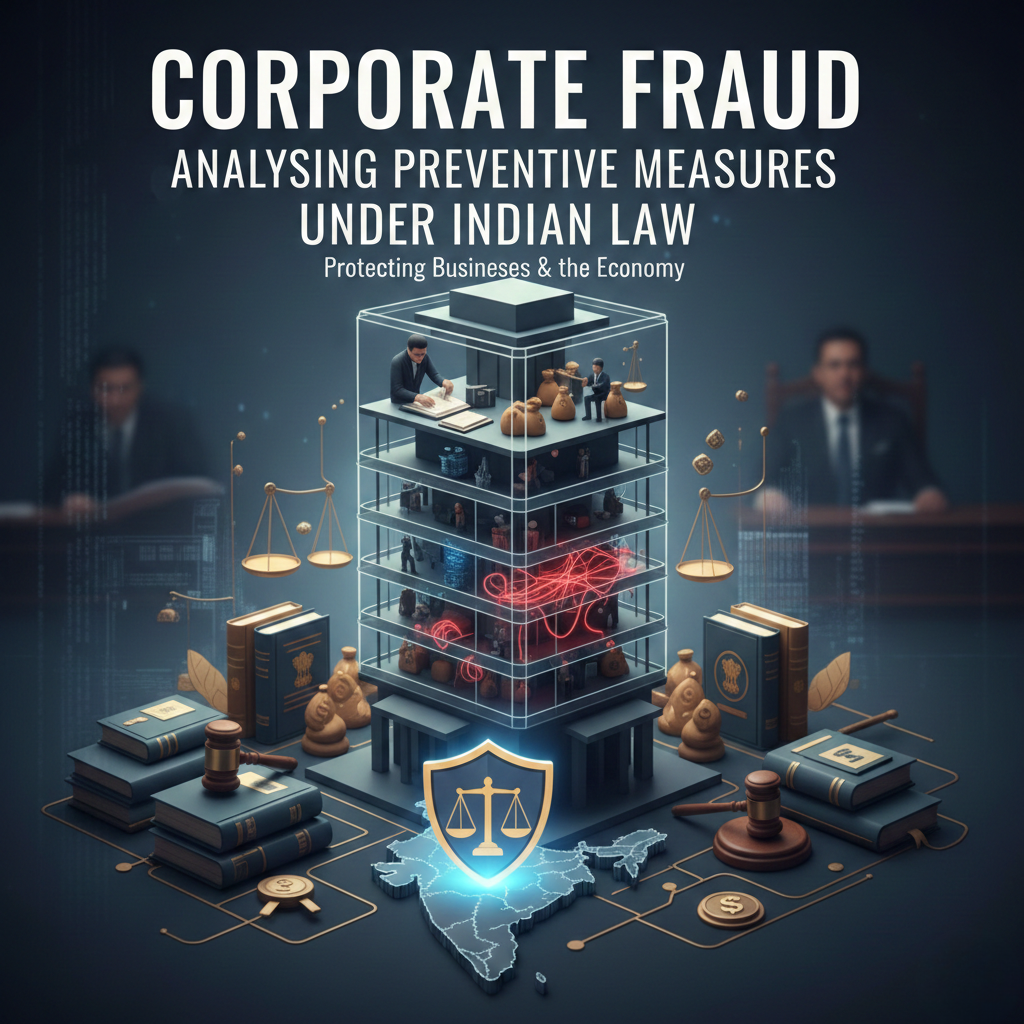
Facebook Instagram Linkedin Home About Us Our Services Articles Contact Us Blog Corporate Fraud in India: Preventive Measures Under the Law Introduction Corporate fraud broadly refers to deliberate acts or omissions by individuals within or associated with a company that are intended to deceive stakeholders and secure unlawful gain. Common forms include financial statement manipulation, diversion of funds, bribery, insider trading, and related-party abuses. In India, the impact of corporate fraud extends beyond individual companies; it undermines investor confidence, weakens financial markets, and imposes systemic costs on the economy. Prevention has become a regulatory priority as India seeks to deepen capital markets and attract global investment. High-profile failures have shown that post-facto enforcement, while necessary, is insufficient to address the scale and sophistication of modern corporate fraud. Indian law increasingly emphasises preventive compliance, placing fiduciary duties on directors, mandating internal controls, and requiring early detection and reporting of fraudulent conduct. For boards and management, fraud prevention is no longer a defensive exercise but a core governance obligation linked to sustainability and long-term value creation. Legal and Institutional Framework India’s corporate fraud prevention regime is anchored in multiple statutes and enforced by specialised agencies. The Companies Act, 2013 is central. Section 447 defines “fraud” expansively and prescribes stringent penalties, including imprisonment and fines. Sections 134 and 177 require directors and audit committees to ensure adequate internal financial controls and vigil mechanisms. The Act also empowers the Serious Fraud Investigation Office (SFIO) to investigate complex corporate frauds involving public interest. The Prevention of Money Laundering Act, 2002 (PMLA) targets laundering of proceeds of crime, including those arising from corporate fraud. It mandates reporting obligations, customer due diligence, and record-keeping, enforced by the Enforcement Directorate (ED). Amendments expanding the scope of “proceeds of crime” and attachment powers reflect a trend towards aggressive asset recovery. The Prevention of Corruption Act, 1988, particularly after its 2018 amendments, criminalises bribery by commercial organisations and introduces the concept of “adequate procedures” as a defence, aligning Indian law with global anti-bribery standards. Traditional offences such as cheating and criminal breach of trust continue to be prosecuted under the Indian Penal Code, 1860, while the Insolvency and Bankruptcy Code, 2016 addresses fraudulent and preferential transactions during insolvency. For listed entities, SEBI regulations, including the Listing Obligations and Disclosure Requirements (LODR), impose disclosure, governance, and audit obligations. Collectively, these laws signal a shift from reactive punishment to structured prevention and early detection. Core Preventive Measures — Legal and Corporate Best Practices Corporate governance and board oversightIndian law places primary responsibility for fraud prevention on the board. Directors’ duties under Section 166 of the Companies Act require acting with due care and diligence. Effective boards establish independent audit committees, ensure segregation of powers, and actively review fraud risks. A common pitfall is treating fraud oversight as a purely management function rather than a board-level responsibility. Internal controls and financial reportingSection 134(5) mandates directors to confirm the adequacy and operating effectiveness of internal financial controls. Robust internal audit functions, supported by independent external audits, are essential. Weak documentation and over-reliance on management representations often undermine these controls. Compliance management systems and risk assessmentAn integrated compliance framework helps identify regulatory and fraud risks across operations. Under PMLA and sectoral regulations, companies must implement AML and KYC procedures where relevant. Periodic risk assessments aligned to business changes are critical; static compliance manuals are ineffective. Whistleblower and vigil mechanismsSection 177 requires listed companies and prescribed classes of companies to establish vigil mechanisms. Effective systems ensure confidentiality, non-retaliation, and clear investigation protocols. Cultural resistance and lack of trust remain common obstacles. Transactional safeguardsDue diligence on mergers, acquisitions, and third-party engagements helps identify red flags. Well-drafted contracts with audit rights, representations, and termination clauses reduce exposure. In practice, commercial pressures often dilute diligence standards. Technology and forensic toolsData analytics, continuous monitoring, and forensic accounting tools enable early detection of anomalies. While technology enhances efficiency, over-reliance without skilled interpretation can create blind spots. Training and ethical cultureRegular training on fraud risks, legal obligations, and ethical conduct reinforces preventive systems. Leadership tone is decisive; policies unsupported by ethical leadership quickly lose credibility. Case Studies and Examples A landmark Indian example is the Satyam Computer Services fraud uncovered in 2009. The company’s founder admitted to manipulating financial statements to the tune of thousands of crores of rupees. Investigations by SFIO and subsequent prosecutions highlighted failures in board oversight, audit independence, and internal controls. The case directly influenced the enactment of the Companies Act, 2013, particularly provisions on independent directors, audit committees, and internal controls. The preventive lesson is clear: formal governance structures must be matched by substantive independence and vigilance. Consider a hypothetical mid-sized listed manufacturing company engaging multiple overseas agents to secure contracts. Weak due diligence and incentive-driven targets lead to undisclosed commission payments routed through shell entities. A whistleblower complaint triggers an internal investigation, revealing potential violations of the Prevention of Corruption Act and PMLA. Early detection through a functioning vigil mechanism allows the company to suspend transactions, self-report, and remediate controls, significantly mitigating regulatory exposure. This scenario illustrates how preventive systems, even when fraud occurs, can limit damage and demonstrate good faith to regulators Practical Compliance Checklist Establish a board-level fraud risk oversight framework Ensure independent and empowered audit committees Implement documented internal financial controls Conduct periodic fraud and compliance risk assessments Maintain effective AML and KYC procedures where applicable Operate confidential whistleblower mechanisms Perform rigorous third-party and transaction due diligence Use data analytics for continuous monitoring Train employees and directors regularly Periodically test and update fraud response plans Preventive Measure — Legal Basis — Implementation Step Preventive Measure | Legal Basis | Implementation StepBoard oversight | Companies Act, 2013 s.166 | Regular fraud risk reviewsInternal controls | Companies Act, 2013 s.134 | Document and test controlsVigil mechanism | Companies Act, 2013 s.177 | Independent reporting channelAML compliance | PMLA, 2002 | KYC and transaction monitoringAudit independence | SEBI LODR | Rotate auditors, limit non-audit workThird-party diligence | Judicial guidance | Standardised diligence protocols Enforcement Challenges
Corporate Governance Practices in Startups: Challenges and Opportunities

Facebook Instagram Linkedin Home About Us Our Services Articles Contact Us Blog Corporate Governance Practices in Startups: Challenges and Opportunities Introduction: Governance in the Startup Corporate governance in startups refers to the structures, processes, and norms that guide decision-making, accountability, and control within young, fast-growing organizations. Unlike large public companies, startups typically operate with small teams, concentrated ownership, and high uncertainty. Governance is therefore often informal, founder-driven, and evolving. This informality can be an advantage in the earliest stages, enabling speed and experimentation. However, as soon as external capital, multiple founders, employees with equity, or regulatory exposure enter the picture, weak governance becomes a material risk. In today’s startup ecosystem, governance matters earlier than it did a decade ago. Investors increasingly scrutinize board practices, financial discipline, and ethical culture even at seed and Series A stages. Regulators expect compliance with labor, data protection, and tax laws regardless of company size. Founders also face personal risk when roles, authority, and decision rights are unclear. Effective governance is not about bureaucracy; it is about creating clarity, trust, and resilience. Startups that adopt fit-for-purpose governance early are better positioned to scale, raise capital, and navigate inevitable shocks. Why Governance Matters for Startups Strong governance delivers strategic value well beyond compliance. First, it enhances decision quality. A functioning board or advisory group introduces diverse perspectives, challenges founder assumptions, and reduces blind spots. This is particularly valuable when a startup pivots, enters new markets, or makes major hiring or acquisition decisions. Second, governance builds investor confidence. Angel investors and venture capital firms consistently cite transparency, reporting discipline, and board maturity as indicators of execution risk. According to a survey by the OECD, weak governance is a common red flag in early-stage investments (OECD, 2015). Clear governance structures signal that founders can be trusted with capital and are prepared for growth. Third, governance supports risk management. Startups face operational, financial, legal, and reputational risks. Basic controls—such as segregation of duties, documented approvals, and compliance checklists—reduce the likelihood of fraud, regulatory penalties, or founder disputes that can destroy value. Finally, governance enables scaling. As headcount grows and operations become more complex, informal decision-making breaks down. Defined roles, escalation paths, and performance metrics allow founders to delegate without losing control. In short, governance is a growth enabler, not a constraint. Common Governance Challenges in Startups Founder Entrenchment and Control Causes: Founders often retain disproportionate control due to vision, early risk-taking, or majority equity.Consequences: Decision-making can become opaque, emotional, or resistant to feedback, discouraging investors and senior hires.Example: A CEO-founder blocks a necessary CFO hire to retain financial control, delaying institutional funding. Lack of a Formal Board and Role Confusion Causes: Early-stage startups rely on informal advisors without clear mandates or accountability.Consequences: Strategic oversight is weak, and founders blur management and governance roles.Example: An investor assumes board authority without appointment, creating conflict during a strategic pivot. Weak Financial Controls and Reporting Causes: Focus on growth over discipline, limited finance expertise, and resource constraints.Consequences: Cash burn surprises, misstated revenues, and delayed corrective action.Example: A startup realizes too late that runway is only three months due to poor cash forecasting. Equity and Cap Table Disputes Causes: Informal equity promises, undocumented vesting, and lack of shareholder agreements.Consequences: Founder fallouts, employee litigation, and investor reluctance.Example: A departing co-founder retains unvested shares, complicating a Series A round. Regulatory and Compliance Gaps Causes: Assumption that small size equals low regulatory exposure.Consequences: Fines, shutdowns, or reputational damage, especially in fintech, health, or data-driven startups.Example: Failure to comply with data protection laws triggers customer complaints and regulator scrutiny. Culture, Ethics, and Compensation Misalignment Causes: Rapid hiring without codified values or compensation principles.Consequences: Toxic culture, inequitable pay, and ethical lapses.Example: Sales incentives encourage aggressive practices that later violate customer trust. Summary Table: Challenges and Practical Mitigations Governance Challenge Key Risk Practical Mitigation Founder entrenchment Poor strategic decisions Independent director or advisor No formal board Lack of oversight Board charter and cadence Weak financial controls Cash mismanagement Monthly reporting and KPIs Cap table disputes Litigation, deal delays Vesting and shareholder agreements Compliance gaps Regulatory penalties Basic compliance checklist Governance Opportunities and Benefits When implemented thoughtfully, governance creates tangible upside for startups. One major benefit is fundraising efficiency. Startups with clean cap tables, regular financial reporting, and documented decision-making often close rounds faster and on better terms. Investors spend less time on diligence issues and more time supporting growth. Governance also improves execution discipline. Regular board or advisory meetings force prioritization and follow-through. Tracking a small set of KPIs—such as monthly recurring revenue, churn, burn rate, and hiring velocity—creates early warning signals and supports data-driven decisions. Another opportunity lies in talent attraction and retention. Senior executives and high-potential employees are more likely to join startups that demonstrate professionalism, ethical standards, and fair compensation practices. A clear governance framework reassures them that the company will not be derailed by founder disputes or ad hoc decision-making. Exit readiness is another measurable benefit. Acquirers and public market investors expect documented controls, contracts, and compliance history. According to PwC (2020), governance gaps are a frequent cause of valuation discounts in M&A transactions. Startups that “govern as they grow” avoid costly clean-up exercises later. Finally, governance mitigates downside risk. While no framework eliminates failure, good governance reduces the probability that failure results from preventable issues such as fraud, regulatory sanctions, or internal conflict. In volatile markets, this resilience can be the difference between survival and collapse. Practical Governance Framework and Checklist for Startups Case Studies: One Success, One Cautionary Tale Success Case: Atlassian (Early Years)Atlassian’s founders established an independent board early and emphasized transparency and ethical culture. According to public interviews, this governance discipline supported disciplined scaling and investor confidence leading up to its IPO (Atlassian, 2015). The result was sustained growth with founder control balanced by oversight. Cautionary Case: Theranos (Anonymized Lesson)Theranos is an extreme example of governance failure. Despite significant funding, the company lacked effective board oversight and internal controls, enabling misconduct to go unchecked (Carreyrou, 2018). While most startups